
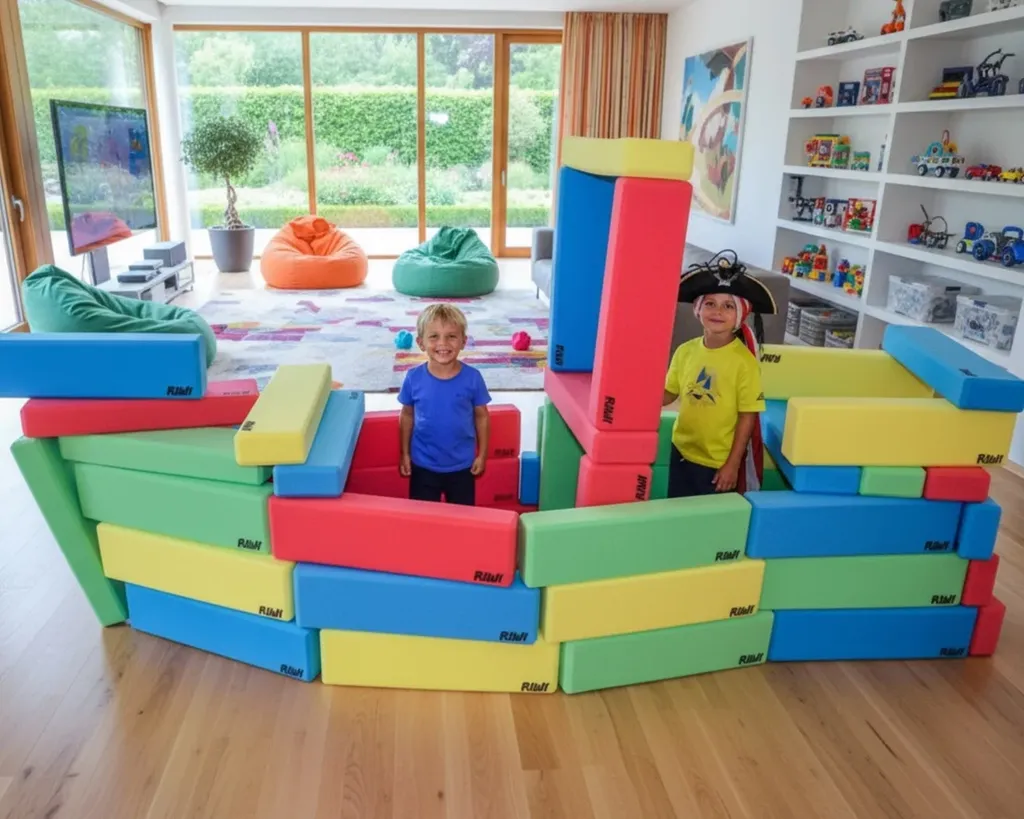
Giant Building Blocks are an exciting way to turn ordinary indoor play into an open-ended creative adventure. Designed for children who love to build, stack, arrange, and experiment, these oversized construction pieces encourage imagination while supporting practical developmental skills. Giant Building Blocks can become castles, houses, towers, bridges, roads, or completely original creations depending on a child's ideas. For families, classrooms, playrooms, and childcare centers, Giant Building Blocks provide a flexible activity that can grow with children's interests. Choosing Giant Building Blocks from a trusted Giant Building Blocks provider can also make it easier to find durable, age-appropriate options for different play environments.
Why Giant Building Blocks Encourage Creativity
Creative play gives children the freedom to explore ideas without needing a single correct answer. Traditional toys may have a specific purpose, while oversized construction blocks can be used in countless ways. A child can begin by stacking a few pieces and gradually develop the structure into an imaginative play space.
Giant Building Blocks support this process because children decide what they want to create. They can change their designs, take structures apart, and rebuild them differently. This freedom makes every play session unique and encourages children to think independently.
Open-Ended Construction Play
Open-ended play does not require children to follow fixed instructions. Instead, they use their imagination to determine the final result. A collection of large foam blocks, plastic construction pieces, or lightweight oversized bricks can become almost anything.
This type of activity can also encourage storytelling. A tower might become a magical castle, while a row of blocks could represent a train station. By combining construction with pretend play, children can develop both creative thinking and communication skills.
Experimenting With Different Designs
Building involves trial and error. Children quickly learn that some structures need a wider base, balanced pieces, or careful positioning. When a tower falls, they can try another approach. For more information about large building blocks for kids, explore their features, benefits, age suitability, and role in encouraging imaginative and educational play.
Giant Building Blocks make this experimentation engaging because children can physically interact with their designs. They learn simple concepts related to balance, size, shape, stability, and spatial relationships while having fun.
Developmental Benefits of Giant Building Blocks
Beyond entertainment, construction activities can contribute to several areas of childhood development. Children naturally practice important skills while selecting pieces, carrying them, positioning them, and working toward a finished structure.
Fine and Gross Motor Skills
Large blocks encourage children to move their arms, hands, and bodies as they construct. Lifting, carrying, stacking, connecting, and repositioning pieces can support gross motor development.
Smaller construction actions, such as fitting pieces together or carefully aligning blocks, can also strengthen hand-eye coordination. Giant Building Blocks therefore offer an active alternative to passive screen-based entertainment.
Problem-Solving and Critical Thinking
Building challenges children to solve practical problems. If a structure becomes unstable, they need to determine why. If they want to make a taller tower, they must consider how to keep the base secure.
These experiences introduce problem-solving in a natural and enjoyable way. Children learn to observe, test an idea, identify mistakes, and try again.
Social and Communication Skills
Construction play becomes even more valuable when children work together. Two or more children can plan a shared structure, divide tasks, exchange ideas, and negotiate decisions.
Giant Building Blocks can encourage teamwork because large projects often require cooperation. One child may build the foundation while another adds walls or decorative elements. This shared experience helps children practice communication and collaboration.
Choosing the Right Giant Building Blocks
Not every block set is suitable for every child or environment. Before purchasing, parents and educators should consider the child's age, the available space, the materials, and how the blocks will be used.
Material and Durability
Construction blocks are available in various materials. Foam blocks are generally lightweight and soft, making them suitable for many indoor play areas. Plastic blocks can provide a firmer construction experience, while other materials may be designed for specialized educational or recreational settings.
Look for well-made pieces with smooth surfaces and construction that can withstand repeated use. Giant Building Blocks used in classrooms or childcare environments should be particularly durable because they may be handled by many children every day.
Size and Storage
Oversized blocks require adequate storage space. Before choosing a set, measure the play area and consider where the pieces will be kept when children are finished playing.
A good storage system can make cleanup easier. Large baskets, shelves, storage containers, or designated playroom areas can keep construction pieces organized and accessible.
Age Appropriateness
Always select building sets according to the manufacturer's recommended age range. Younger children may benefit from larger, simple pieces, while older children can often handle more complex construction systems.
Supervision is also important, particularly when children are using blocks to create tall structures or enclosed play spaces.
Creative Activities With Giant Building Blocks
One advantage of large construction toys is that parents and educators can introduce simple challenges without limiting children's imagination.
Build a Pretend City
Invite children to create a miniature city using blocks. They can construct houses, shops, bridges, parks, roads, and other structures. Once the city is complete, encourage them to create stories involving the buildings.
This activity combines construction with role-play and helps children explore concepts such as community, organization, and cooperation.
Create an Obstacle Course
Large blocks can also become part of an indoor obstacle course. Children can walk around structures, move between block formations, or complete simple movement challenges.
Make sure the activity is appropriate for the available space and that all structures are stable. The goal should be active play without creating unnecessary safety risks.
Design the Tallest Tower
A tower-building challenge encourages children to think about balance and stability. Ask them to create the tallest structure they can while keeping the base secure.
Giant Building Blocks make this activity particularly engaging because children can immediately see how different arrangements affect their designs.
Giant Building Blocks in Classrooms and Playrooms
Educators can use construction play as part of early learning activities. Blocks can support lessons involving shapes, counting, colors, patterns, measurement, and spatial awareness.
For example, children can be asked to sort blocks by size or shape before using them to build a structure. Teachers can also introduce simple mathematics by asking children to count pieces, compare heights, or identify repeating patterns.
At home, Giant Building Blocks can create a dedicated creative-play zone where children have freedom to construct whenever inspiration strikes. Because the same pieces can be reused for different projects, they provide long-term play possibilities.
Making Construction Play More Engaging
Adults do not need to control the building process. Instead, they can encourage children by asking questions such as, “What are you building?” “How can you make it stronger?” or “What could you add next?”
These questions encourage children to explain their thinking while maintaining control over their creations. Giant Building Blocks work best when children have enough freedom to explore rather than being expected to reproduce a particular design.
Rotating activities can also keep play fresh. One day children might build animals, while another session could focus on houses, vehicles, towers, or imaginary worlds.
Safety Tips for Building Play
Safety should always be considered when children use oversized construction toys. Select blocks made from child-appropriate materials and check them regularly for cracks, sharp edges, loose components, or other damage.
Keep construction activities away from stairs, fragile furniture, and other hazards. Children should understand that blocks are intended for building rather than throwing. Tall structures should be built in areas where they cannot fall onto other children.
With appropriate supervision and sensible play rules, Giant Building Blocks can provide an enjoyable and productive indoor activity.
Frequently Asked Questions
1. What are Giant Building Blocks?
Giant Building Blocks are oversized construction pieces designed for creative building and imaginative play. Depending on their material and design, they can be used to create structures such as towers, houses, castles, bridges, and play environments.
2. Are Giant Building Blocks suitable for indoor play?
Yes, many Giant Building Blocks are designed specifically for indoor environments. Lightweight foam options are particularly useful for playrooms, classrooms, childcare spaces, and other areas where children need a comfortable construction activity.
3. What skills do children develop through building?
Building can support problem-solving, spatial awareness, hand-eye coordination, motor skills, creativity, communication, and teamwork. Children also learn about balance, shapes, sizes, and basic structural concepts through hands-on experimentation.
4. How can parents make block play more creative?
Parents can introduce imaginative challenges such as building a city, designing a castle, creating a bridge, or constructing a pretend store. However, it is useful to allow children to decide how they want their creations to look.
5. How should Giant Building Blocks be stored?
Large construction pieces can be stored in sturdy baskets, open shelving, storage bins, or a dedicated play area. Keeping pieces organized makes cleanup easier and allows children to access their building materials independently.
Conclusion
Giant Building Blocks transform simple construction into an opportunity for endless imagination, active learning, and collaborative play. From developing motor skills and problem-solving abilities to encouraging storytelling and teamwork, oversized blocks can support many aspects of childhood development. Their open-ended nature means children can return to them repeatedly and discover new ways to play. Whether used at home, in a classroom, or in a childcare setting, Giant Building Blocks offer a practical foundation for creative indoor entertainment. With the right materials, age-appropriate designs, safe play practices, and plenty of freedom, Giant Building Blocks can become a valuable part of a child's everyday creative experience.